02
Alerts a member can act on
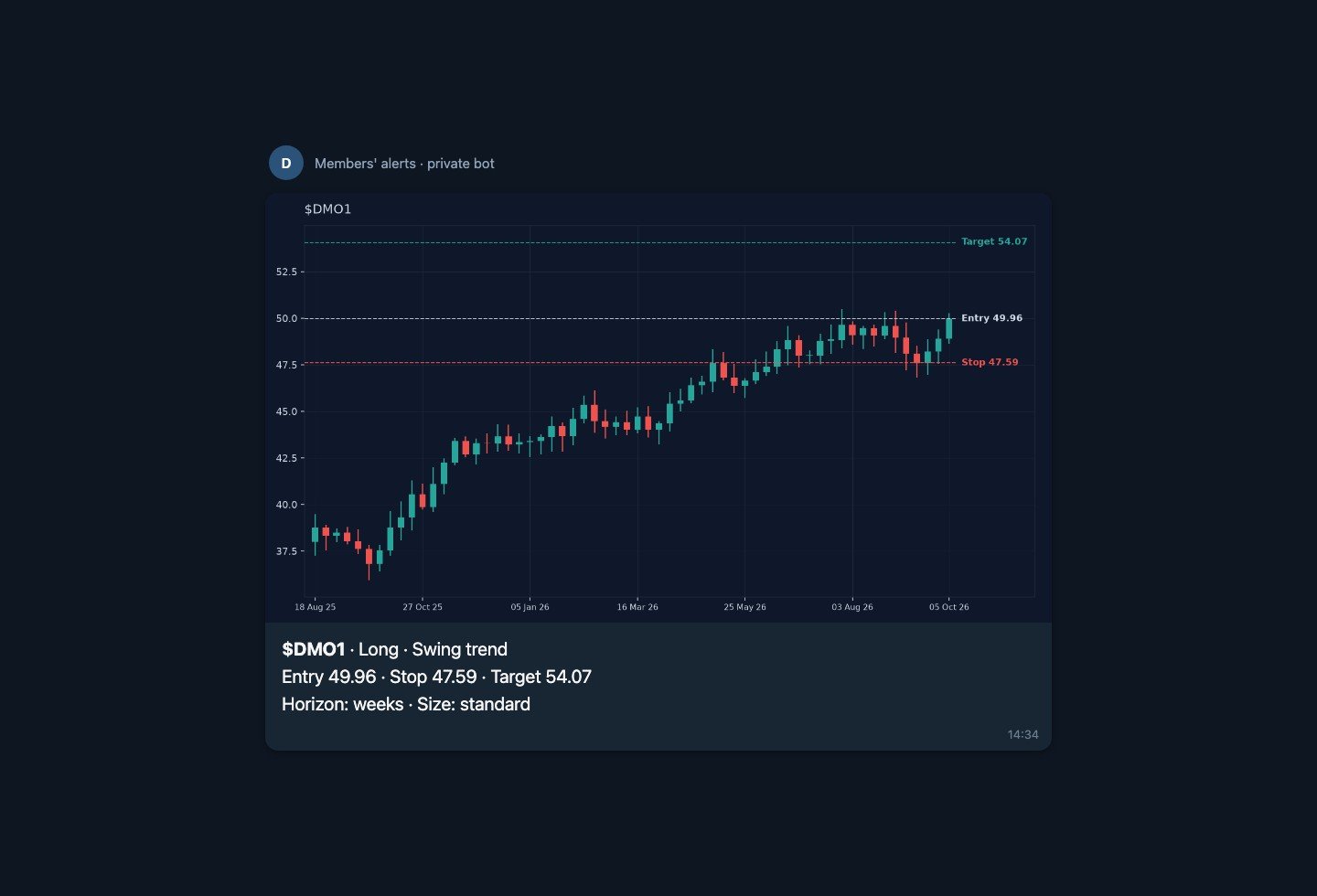
Each alert carries the setup type, side, entry, stop, target, horizon and size, with a plain chart of the levels. The wording never says how the setup was found.
Anonymised application build
This standalone app runs a private trading desk's market monitoring. It scans a watchlist and a wider index on a schedule, puts confirmed setups and near misses on one action board, and sends alerts with entry, stop and target levels to the desk and to invited members. The trading rules are the desk's own and stay private.
Each alert carries the setup type, side, entry, stop, target, horizon and size, with a plain chart of the levels. The wording never says how the setup was found.
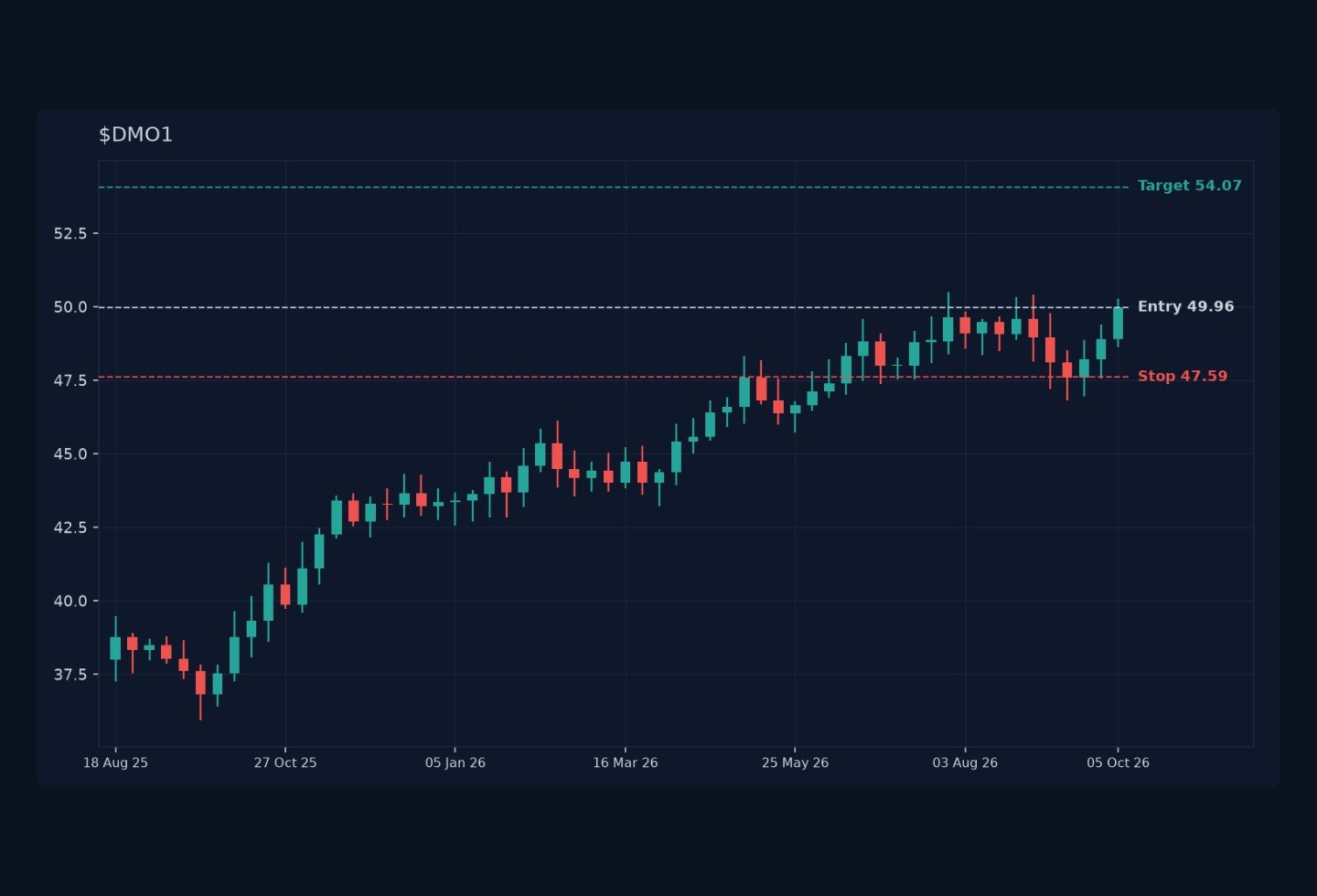
Entry, stop and target are drawn on plain candles, so a member can check the plan at a glance before deciding anything.
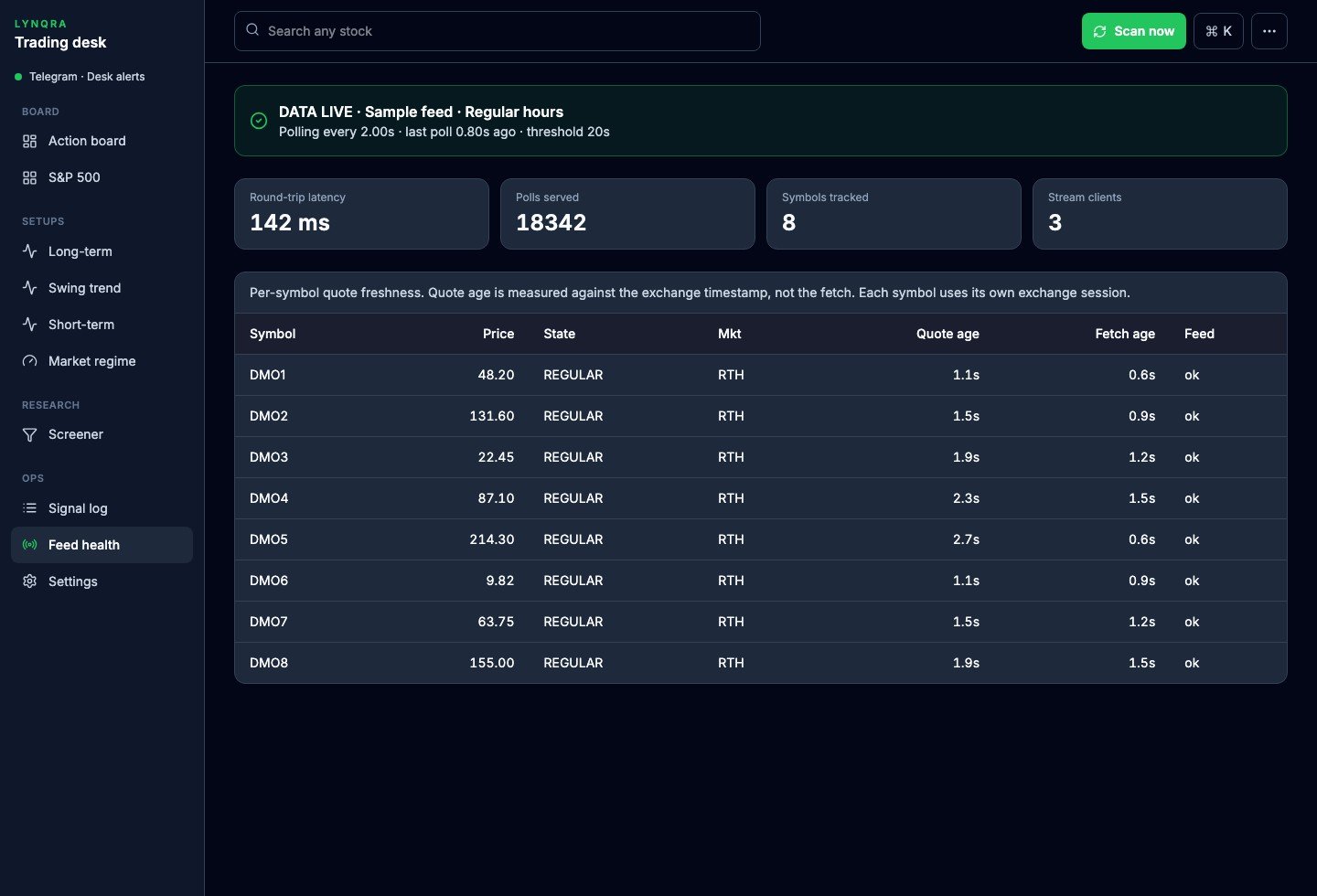
Every quote's age is measured against its own exchange session. The desk sees latency, polling and freshness at a glance, so a stale price never passes for a real move.
The workflow
A desk that follows several kinds of setup across many names cannot watch every chart at once. Checking by hand means late entries, missed setups and alerts sent with the wrong levels. The data also has to be trusted, because a stale quote can look like a real move.
The engine checks the watchlist and a wider index at fixed times and flags a setup only once it is confirmed, so one move does not set off a burst of alerts.
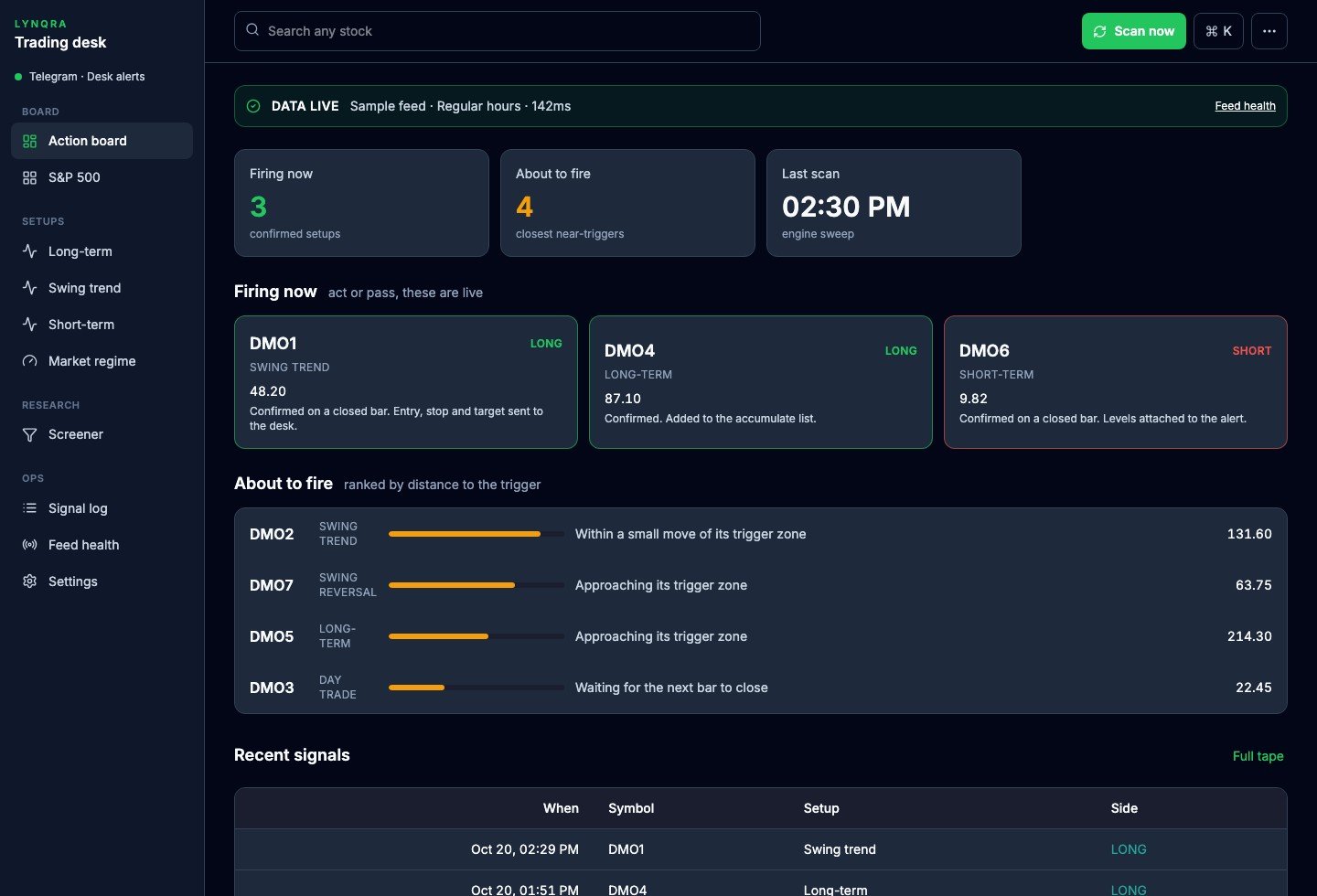
Confirmed setups, names close to a trigger and recent signals sit on one action board. Every signal is recorded with when it fired and whether its alert went out.
The desk's group hears about each new setup as it happens. Invited members get a private message with the setup type, entry, stop, target and a plain chart, and can manage their own watchlist and mutes.
Visibility
The board shows what is firing, what is close, the latest scan and the signal log. A feed health page measures every quote against its own exchange session as live, delayed or stale, and the desk is warned only when data is genuinely stale.
Human control
People make every trading decision and place every order; the app sends no broker orders. The method stays private: member alerts and the members' assistant see only setup labels and price levels, never the rules behind them. Membership is invite only, and every message is checked against an active account.
A practical fit
A working build for teams that act on time-sensitive data: a trading desk, a pricing or purchasing team watching market moves, or an operations team that needs reliable alerts and a clear record of what was sent. The setups, schedule and alert format follow the team's own method.
Start with your process
Bring one repeated task and the tools you use today. We can walk through the handoffs, agree what should run automatically and identify the decisions your team should keep.
Book a free consult